My first prompt had emojis. And I was proud of it.
August 2025. I’ve been selling trips for 42 years. I’m 72 years old. And I’ve just discovered I can ask a machine for things.
My first prompt went like this:
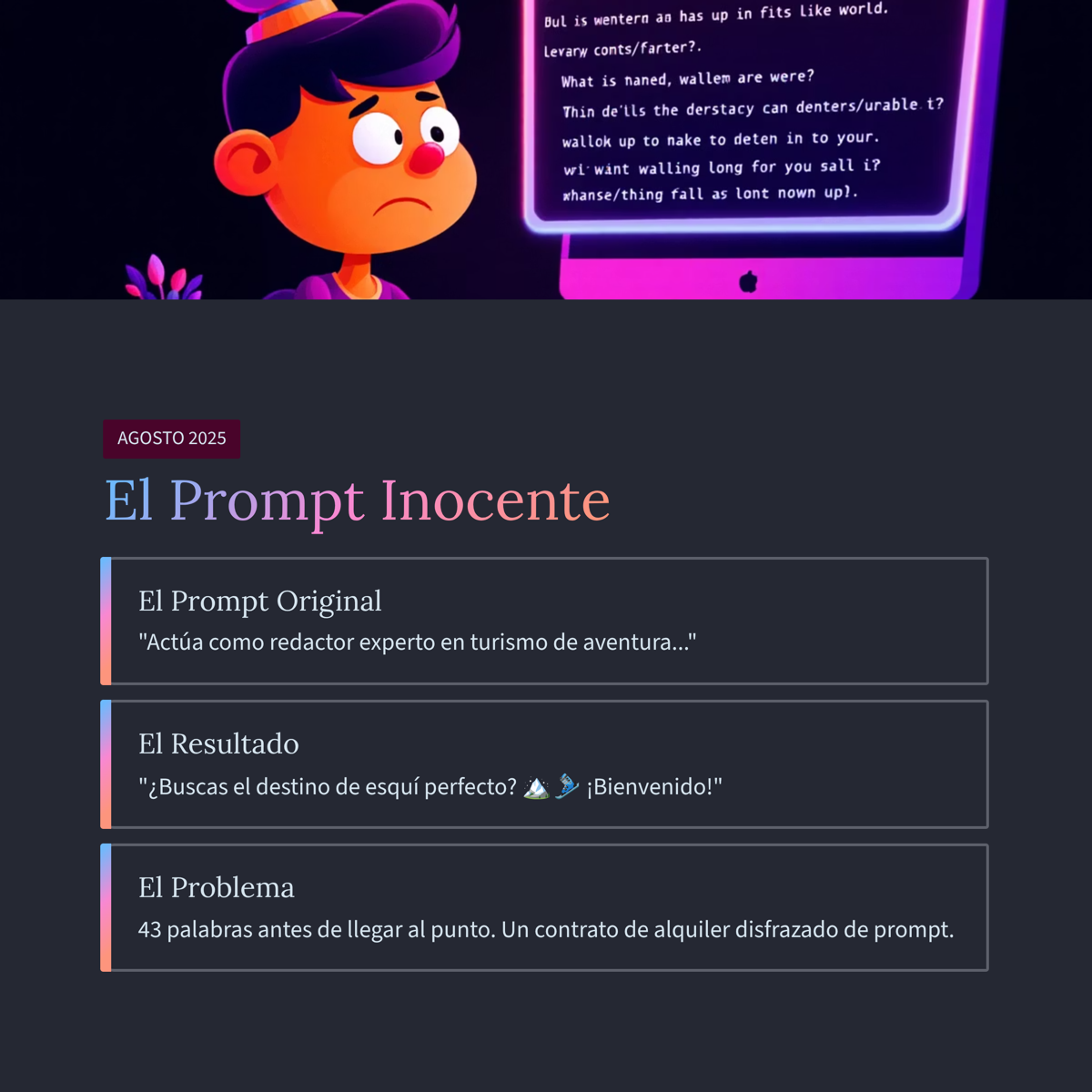
“Act as an expert copywriter in adventure tourism and high-end ski travel. Write a main text aimed at skiers between 25 and 65 years old…”
Forty-three words before getting to the point. A paragraph of instructions that read like a rental agreement. And the result — the glorious result — started with:
“Looking for the perfect ski destination? 🏔️🎿 Welcome to Scibasku!”
Mountain emojis. Exclamation marks. Words like “epic” and “powder” used without irony.
And I was thrilled.
What I didn’t know I didn’t know
That first text called my agency “experts in snow and epic adventures.” It said our trips included “peace of mind.” It had an airplane emoji. It ended with “the snow is waiting. And so are we.”
It was exactly what a 72-year-old man who’s just discovered that machines can write would produce: generic, enthusiastic, and with the depth of a puddle in August.
The problem wasn’t ChatGPT. The problem was me.
I asked it for a text about Whistler. It gave me an airport brochure. Because that’s what I asked for — an airport brochure with emojis and a dash of humor.
The second attempt
A few weeks later, someone shows me there’s another way to talk to the machine. Structure. Context. Examples. XML tags that look like Morse code but the AI reads like maps.
Same destination. Whistler. But now the prompt has sections. It has a defined audience. It has examples between tags.
And the result… still had emojis. But at least now it had sections that resembled something I might have actually written.
Progress. Slow. Like learning to ski at 30 instead of 5 — you can do it, but you fall more and it hurts more.
What changed between August and February
In August 2025 I was asking ChatGPT to write Whistler copy with emojis.
In February 2026 I’ve just finished this:
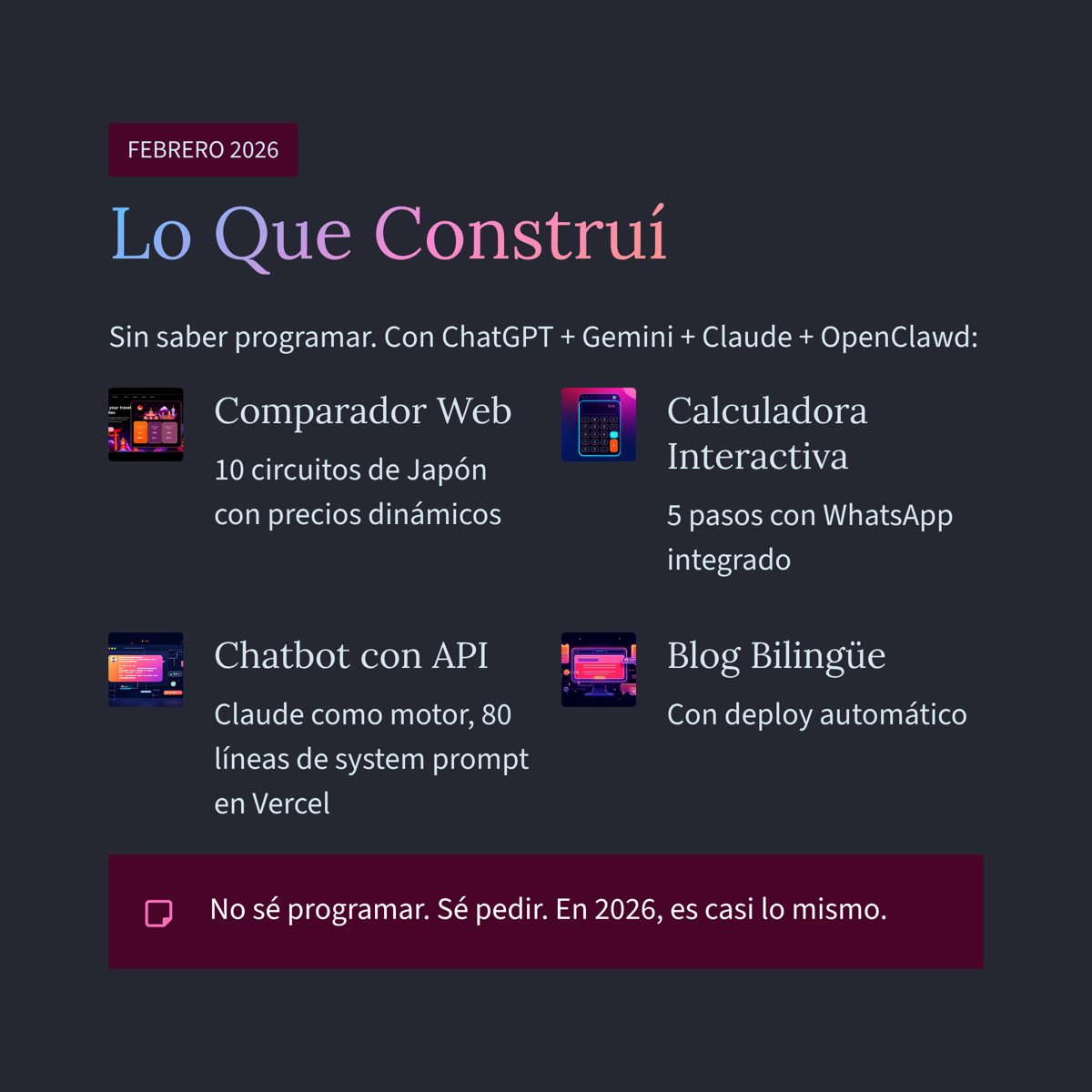
- A web comparison tool for 10 Japan circuits with dynamic pricing that calculates in yen and converts to euros in real time using an exchange rate API
- An interactive calculator with 5 steps, JR Pass in 3 durations, individual supplements, and a WhatsApp button that auto-generates the message with the full quote details
- A chatbot with its own API on Vercel running Claude as its engine, with all 10 circuits in memory, that knows when to say “ask Giora about that” and never shows a yen or a commission
I don’t know how to code. I still don’t know how to code. But I know how to ask. And in 2026, that’s almost the same thing.
The emojis that embarrass me
Today I opened that first document. It’s called “Agente_Scibasku” and it’s still in my Drive, dated August 20, 2025. The profile I created for ChatGPT said:
“I’m Giora Gilead Elenberg, director and owner of Viajes Scibasku, an agency specializing in ski trips, diving, honeymoons, and premium adventure travel.”
So far so good. Then:
“My priority is to maintain a human, warm tone, with a touch of humor and elegance.”
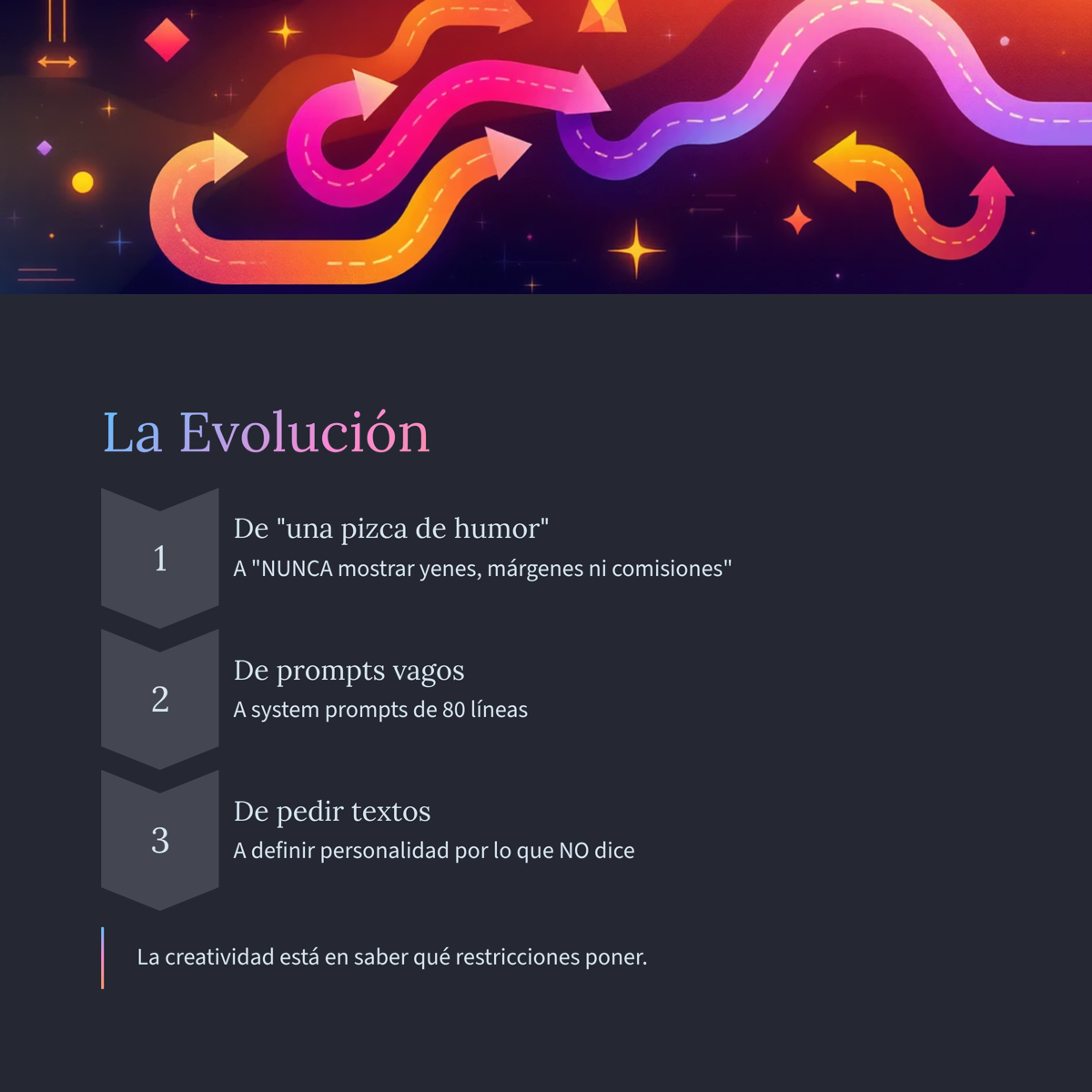
“A touch of humor.” That’s like asking the surgeon for “a tiny bit of anesthesia.” AI gives you exactly what you ask for — and what I was asking for was lukewarm.
Today my Japan chatbot has lines in its system prompt like: “Your tone is that of someone who HAS BEEN to every destination they recommend.” And rules like: “NEVER show yen, margins, commissions, or exchange rates.”
Not “a touch of humor.” Exact instructions. Clear restrictions. Personality defined by what it does NOT say, not by what it says.
From emoji to API
My first “agent” was a ChatGPT profile with emojis.
My agent today is a 6 KB JavaScript file running on a Vercel server, receiving messages over HTTP, passing them to Claude with an 80-line system prompt, and returning responses that sound like I wrote them. Because I wrote the instructions.
Between one and the other: six months. A blog. A course. And 400 conversations with Claude where I asked for impossible things and got back things I didn’t expect.
It wasn’t a straight path. It was a path of wires.
What I learned (whether you’re 72 or 22)
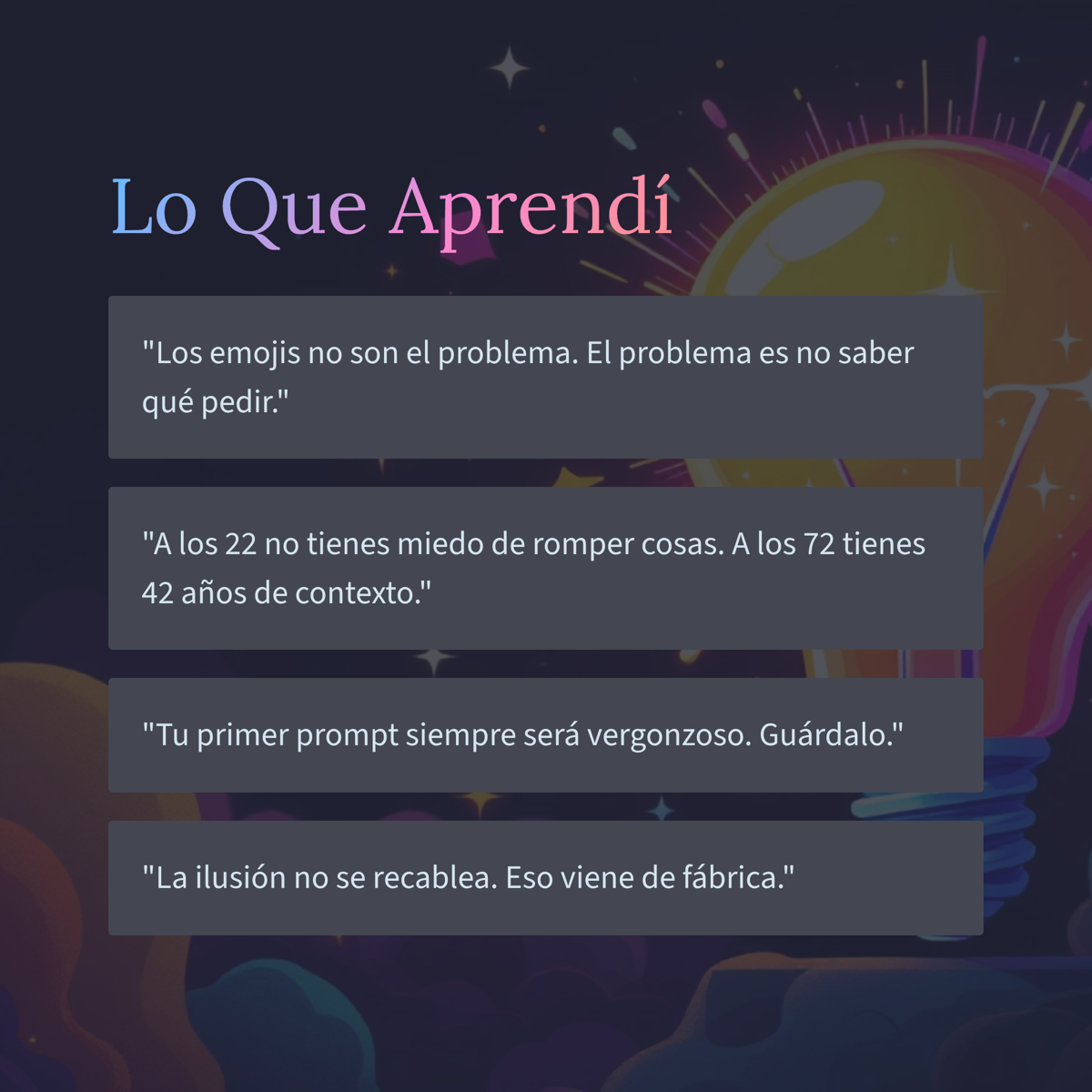
Emojis aren’t the problem. The problem is not knowing what to ask. My first prompt didn’t fail because of the emojis — it failed because I asked a machine to be me without giving it a single clue about who I am.
Structure kills inspiration. And that’s a good thing. A prompt with sections, restrictions, and examples produces better results than a “creative” one. Always. The creativity is in knowing which restrictions to set.
Learning AI at 72 isn’t harder. It’s different. At 22, you’re not afraid of breaking things. At 72, you have 42 years of context to feed the machine. Guess which one is more useful.
Your first prompt will always be embarrassing. Save it. You’ll need it for the blog post.
P.S.
That Whistler text with emojis is still in my Drive. I haven’t deleted it. Sometimes I open it and smile.
Not out of nostalgia. Out of distance.
It’s like looking at your first photo on skis: legs wide apart, poles all over the place, ear-to-ear grin. Terrible technique. Emotionally perfect.
My first prompts were like that. Terrible technique. Plenty of heart.
Today the technique has improved. The heart is still the same.
That part doesn’t get rewired. That comes factory-installed.
What did you think?