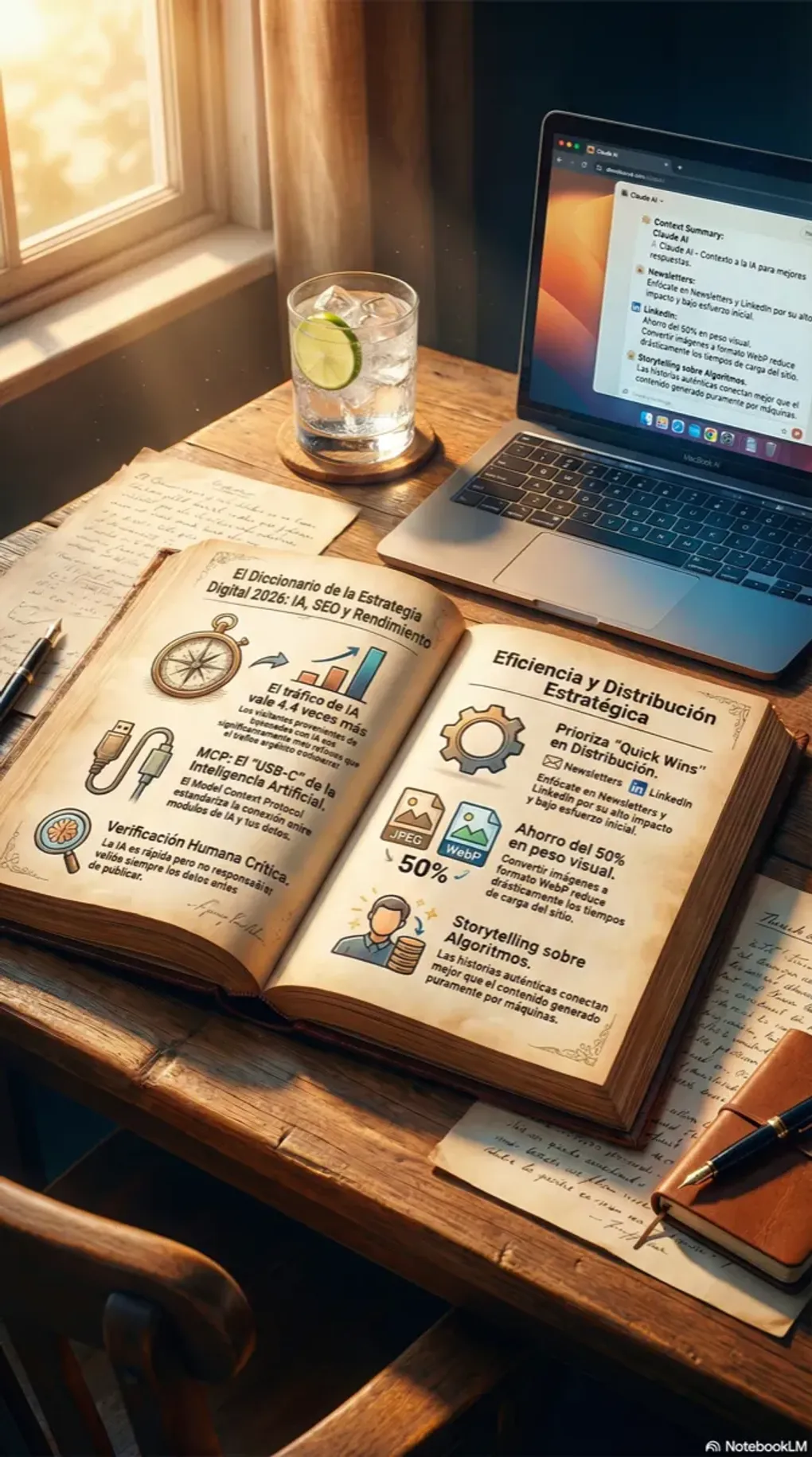
The Dictionary I Wish I Had When I Started
June 2025. 72 years old. 42 years in the travel business.
And I had no f***ing clue what a “prompt” was.
I signed up for an AI course because I noticed my competitors were selling trips with chatbots while I was still using Excel 2003. On the first day, the teacher said: “We’re going to optimize your prompts with few-shot learning techniques based on dataset context.”
I thought: “Wrong class. This is for NASA engineers.”
Turns out it wasn’t. Turns out these scary buzzwords are surprisingly simple when someone explains them without the jargon of a bearded hipster coding in a coffee shop.
This is what I wish I’d known on day one.
The 5 Terms That Saved My Life
1. Prompting (or “how to talk to the machine without pissing it off”)
What it is: The way you talk to AI. Like ordering coffee from a waiter: if you say “coffee,” you get a black espresso. If you say “latte, hot, large cup, no sugar,” you get exactly what you want.
My real example (June 2025): ❌ BAD: “Give me a ski trip” ✅ GOOD: “Act as a travel agent specializing in luxury skiing. Client: couple aged 40-50, intermediate level, budget €8,000, prefer Swiss Alps, traveling in February, want 5* ski-in/ski-out hotel. Give me 3 options with itinerary, itemized prices, and après-ski activities.”
What I learned: The more specific, the better. AI doesn’t guess. You’re the boss.
2. Training (or “teaching it your world”)
What it is: Feeding AI with YOUR specific information. Like onboarding a new salesperson: you hand them the catalogs, company policies, price lists. AI does the same thing, but in 30 seconds.
My real example (July 2025): I uploaded PDFs from 47 liveaboard boats (diving cruises) with itineraries, prices, and technical specs. I told ChatGPT: “You’re a Red Sea liveaboard expert. Answer questions based ONLY on these documents.”
Result: An assistant that knew every cabin, every dive route, every high/low season price. Better than my own memory.
What I learned: AI without your data = generic. AI WITH your data = pure gold.
3. Memory (or “don’t forget who I am”)
What it is: AI’s ability to remember previous conversations. Like when your doctor has your medical history and you don’t have to remind them every single visit that you’re allergic to penicillin.
My real example (August 2025): I told ChatGPT about my ski holiday in Zermatt back in 1987 (yes, 39 years ago). Later, when I asked for help creating content about skiing in Switzerland, it generated text with references to “the untouched magic of Zermatt you’ve known for decades.”
I hadn’t mentioned Zermatt again. It remembered.
What I learned: Memory turns AI from “tool” to “coworker who actually knows you.”
4. Dataset (or “the knowledge warehouse”)
What it is: An organized collection of information that AI uses to learn or respond. Think of a massive library, but in digital form.
My real example (September 2025): I built a dataset from supplier emails (hotels, airlines, DMCs) with confirmations, prices, and cancellation policies. I trained AI on that dataset to automatically extract: hotel name, dates, room count, total price, conditions.
Before: 15 minutes reading each email. After: 10 seconds. AI reads, extracts, formats.
What I learned: Good dataset = effortless automation. Bad dataset = garbage processed at high speed.
5. Context (or “giving it the right clues”)
What it is: The specific information you give AI in EACH conversation so it understands what you’re talking about. It’s not what it remembers (that’s memory) — it’s what you tell it right now.
My real example (October 2025): Without context: “Write me an email to a client” With context: “Write an email to Juan Rodríguez, a client who booked a Maldives liveaboard in April, cancelled due to a family emergency, now wants to reschedule for October. Tone: empathetic, professional, offer 10% discount for the inconvenience.”
The first email: generic, flat, useless. The second email: perfect, human, straight to the point.
What I learned: Context = the difference between a clueless assistant and a brilliant one.
The Plot Twist
Today, 8 months after writing that “dictionary for the lost”:
- I design custom GPTs that train my sales team
- I automate workflows with Make and n8n running in parallel
- I have 5 Claude Code agents working simultaneously on different tasks
- I process supplier emails in seconds with AI that extracts data and creates case files
Secret? None.
I just learned these 5 terms. And used them every single day.
For You, Just Getting Started
If you’re in June 2025 like I was (lost, overwhelmed, thinking “this isn’t for me”), listen up:
You’re not stupid. This is normal.
It took me 3 months to understand what a “dataset” was. Another 2 months to apply “context” properly. And I didn’t grasp the difference between “memory” and “training” until September.
But once you master these 5 terms, everything else follows.
Because these 5 terms are the foundation of everything. The rest is just technical frosting.
PS for My Fellow 70-Somethings
Yes, it can be done. I’m 72 and writing this from a Mac Mini that runs AI agents 24/7 while I sleep.
You don’t need to be an engineer. You need curiosity and patience.
And a good dictionary.
Did this dictionary help? Share it with someone who’s where you were 8 months ago. Sometimes all it takes is someone translating the jargon for you.
Giora Gilead Elenberg 72 years old | Entrepreneur since 1982 | AI learner since 2025 CICMA 2283 | Viajes Scibasku
What did you think?